

One section of Credit Suisse’s bondholders is set to be wiped out following the struggling bank’s takeover by UBS, causing them to see investments worth 16 billion Swiss Francs ($17 billion) become worthless.
The Swiss regulator FINMA announced Sunday that the so-called additional tier one bonds, which are widely regarded as relatively risky investments, will be written to zero as part of the deal.
The move has angered Credit Suisse AT1 bond holders as their investments have seemingly been lost, while shareholders will receive payouts as part of the takeover. Usually, equity investments would be classed as secondary to AT1 bonds.
Therefore, the decision “can be interpreted as an effective subordination of AT1 bondholders to shareholders,” Goldman Sachs’ credit strategists said in a research note published Sunday.
“It also represents the largest loss ever inflicted to AT1 investors since the birth of the asset class post-global financial crisis,” they added.
However, FINMA’s move should not come as a shock, Elisabeth Rudman, global head of financial institutions at DBRS Morningstar, told CNBC’s “Squawk Box Europe” on Monday.
“AT1s are there to absorb losses, so it’s not a surprise,” she said. “They’ve done what they were supposed to do.”
AT1 bonds, also known as contingent convertibles or “CoCos,” are a type of debt that is considered part of a bank’s regulatory capital. Holders can convert them into equity or write them down in certain situations – for example when a bank’s capital ratio falls below a previously agreed threshold.
AT1s were created in the aftermath of the financial crisis as a way of shifting risks away from taxpayers in crisis situations. Due to their higher risk factor, they often have higher yields than other bonds.
Credit Suisse’s takeover deal, worth $3.2 billion, by rival Swiss bank UBS was agreed Sunday with the help of Swiss authorities.
After years of losses and difficulties, Credit Suisse’s struggles came to a head last week after its biggest investor, the Saudi National Bank, said it could not offer any more support to the Swiss bank financially due to regulatory restrictions. This came just days after the collapse of Silicon Valley Bank and Signature Bank in the U.S. sent shockwaves through the banking sector.
The Swiss National Bank then said it would support Credit Suisse with up to 50 billion Swiss Francs ($54 billion), but investor concerns remained and the situation became untenable.
The development also sparked concerns about how this could impact global credit markets and AT1 bonds from other major financial institutions.
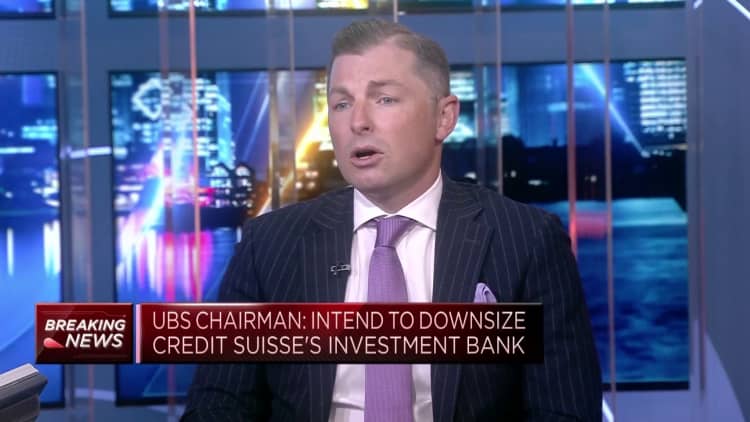
Rudman says it may impact investor’s views of the bonds and how much they are willing to pay for them.
“I don’t think it’s a risk that they will be written down. There would be risks attached to the pricing and how investors, perhaps some investors reassess the yield they are looking for,” she highlighted.
Meanwhile, Goldman Sachs notes that FINMA’s decision “greatly weakens the case to add risk.”
“Whether investors treat this decision as a one-off or whether they rethink the asymmetry of their risk-reward at times of elevated financial distress remains to be seen,” the firm’s strategists say.
“It has become harder to assess the attractiveness of the current historically large spread pick-up provided by AT1 bonds vs. their HY (high-yield corporate counterparts,” Goldman explained, concluding that this will likely lead to a reduced appetite for AT1 bonds.
Other regulators distance themselves
Meanwhile, banking regulators in the European Union, which Switzerland is not a part of, indicated on Monday that they would follow a different approach if similar situations arose within their remit.
While they said they welcomed the steps taken by Swiss authorities to resolve the situation, they also noted that there is a specific order in which “shareholders and creditors of a troubled bank should bear losses”.
“In particular, common equity instruments are the first ones to absorb losses, and only after their full use would Additional Tier 1 be required to be written down. This approach has been consistently applied in past cases and will continue to guide the actions of the SRB (Single Resolution Board) and ECB (European Central Bank) banking supervision in crisis interventions,” their statement read.
The statement may ease investor concerns slightly, which BofA Global Research analysts noted Monday.
“The actions of the Swiss authority will remain, in our view, a factor for the market. We still fear the market is very fragile. However, we also believe that we are already seeing confidence building measures from the European authorities to support the market,” they said.
Read the full article here


